A brute that only had a weapon
Since launch, a brute wore only one thing: its weapon. All the rest of progression went through stats and skills, two systems you can't see. A level 40 brute and a level 5 brute looked exactly alike, apart from the blade.
This sprint adds the game's second equipment axis: armor. Sixteen pieces, four exclusive slots, four sets, and above all something you can see on screen, from the profile page and throughout the whole fight.
Four slots, sixteen pieces
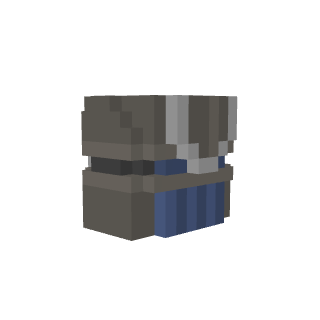
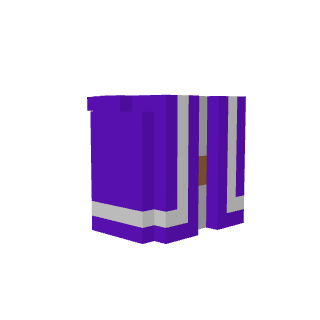
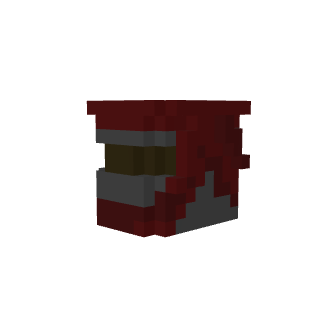
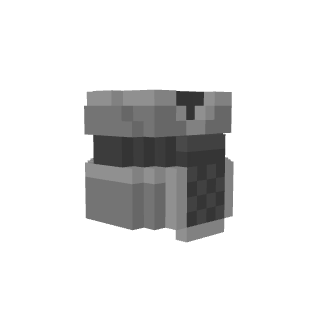
Your brute wears at most four pieces at once: helmet, chest, shoulders, boots. One slot, one piece, no layering. Each piece brings two stats, its set's stat and a secondary one, rolled within a range when you receive it.
The chest always carries the biggest share of the budget, about 35%, ahead of the helmet at 25% and the shoulders and boots at 20% each. Without that weighting, the four pieces of a set would have been the same item in four copies.
Four sets, four archetypes
The dominant stat comes from the set, not from the slot. That is the key design choice of the sprint: giving one stat per slot would have made the four sets interchangeable, since you would simply wear the four best pieces you found.
- Iron Sentinel (rare, level 12): the Stamina archetype, plate and lots of hit points.
- Arcanist (rare, level 14): the Speed archetype, cloth and no dead weight.
- Crimson Creed (rare, level 15): the Agility archetype, leather cut for dodging.
- Ironclad (uncommon, level 5): the Strength archetype, and the first wearable set in the game.
The set bonus: 2, 3 and 4 pieces
Each set grants a tier at 2, 3 and then 4 pieces worn. Tiers don't stack: only the highest one reached applies, and it boosts the same stat as the pieces, so wearing a full set amounts to specializing twice.
Each tier has a flat part and a part expressed as a percentage of your stat (weapon and armor included), and both grow from tier to tier. The percentage fixes a real problem: armor bonuses are flat, so their weight melts away with every level. Twenty-three hit points are about a quarter of a level 5 brute's pool, and less than a tenth at level 20. The percentage, on the other hand, scales with the brute.
As for the flat part, it is there for a less obvious reason: on a small stat, two neighboring percentages land on the same integer once rounded. With 27 speed, 3% and 4% give 0 and 1, but at 38 both give 1. A tier that adds nothing is exactly the bug we fixed along the way.
Calibrating four single-stat sets
This is the part that took the most simulations. The game's four stats don't have the same return at all, and a single-stat set exposes that asymmetry head-on: hit points and strength are linear, speed scales with a square root, and agility runs into two hard caps, 65% dodge and 50% crit.
So the ranges aren't numerically equal between sets. They were solved by simulation, with this equivalence measured for the same win rate:
- 35 hit points are worth about 11 agility, 8 strength or 6 speed.
One method detail changed everything: calibration is done with both brutes carrying the same rare weapon. Measuring against an unarmed brute was misleading, because fighting without a weapon is such a crushing handicap that a common bludgeon was enough to win nine fights out of ten. The baseline was artificially low and overrated even the smallest armor bonus.
At level 20, full set against the same brute without armor, all four sets win 74 to 79% of their fights, and duels between sets stay between 49 and 52%. Two pieces already give 65 to 68%, three pieces 70 to 73%: there is no dead tier where you wear a piece for nothing.
The 5 hit point floor
One hard rule came out of this calibration: no hit point value goes below 5, neither in a piece's range nor in a set tier. The game itself converts one allocated stat point into 5 hit points, so 5 is the smallest unit worth anything. A piece at "+1 HP" offered a fifth of the smallest possible bonus on any other stat, and the interface displayed it next to a +35 rare weapon.
An accepted consequence: armor is stronger in absolute terms than it would have been otherwise. What is held constant is the balance between sets, not their power against a naked brute.
How to get it
Every fight won rolls for an armor piece, with a draw independent from the weapon's: a victory can bring both, or neither. The odds are 7% for an uncommon piece and 5% for a rare piece, doubled while an Elixir of Plunder is active.
The rest comes from progression: the level 10, 15 and 20 milestones guarantee a piece, several career quests do too, and some days of the login calendar flip a coin between a weapon and an armor piece. Weapon quests, however, will never give armor: they reward using a weapon category, and breaking that link would have made their requirements confusing.
Armor is forged with the same shards as weapons, and a duplicate converts into a shard of its rarity. The caps are lower than for weapons (+3 for a common piece, +4 uncommon, +5 rare, +6 epic, +7 legendary): a brute wears four pieces against one weapon, and a rare set forged to the cap weighs a little more than a rare weapon taken to +10. The details are in the forge guide. One difference from weapons is deliberate: the required level governs wearing, never the drop, so a piece found too early waits for you in the inventory until you reach its set's level.
The rendering: no placement table
Technically, armor is like weapons in one respect and unlike them in another. Like weapons, each piece is a separate model: merging them into the brute model would make every visitor download every set in the game, including someone looking at the home page without an account.
On the other hand, weapons need a placement table, with position, rotation and scale per category, tuned by hand in a workshop. Armor has none. The pieces are exported from the same origin as the brute, so their node already carries its position: added as they are, they land exactly where they were modeled. The breastplate covers the torso precisely, the boots match the footprint of the feet. If a future piece floats, the fix is in the model, not in an offset table.
That leaves what a piece hides. The chest replaces the body, the clothes and the belt; the boots replace the feet; the helmet hides the whole family of haircuts, accessories included, but leaves the head and eyebrows visible, because you can see a face under a helm. The pauldrons replace nothing: they are layered on top.
A page for all of it
The arrival of armor comes with an equipment catalog: all sixteen pieces with their ranges, the four sets with their tiers, and a page per set that says who it is for and what it is really worth. It is the same treatment as the weapon catalog, with one difference: the unit there is the set rather than the piece, because four pieces from the same set tell the same story.
What's next?
The registry is designed to grow without touching the engine: a piece is one entry and its ranges. The ideas on the table, from most to least likely:
- epic and legendary sets, the two rarities that have no pieces today,
- deliberately mismatched sets, with bonuses that would reward mixing rather than collecting,
- event pieces, seasonal and cosmetically recognizable.
Until then, go dress up your brute. And if you are torn between completing a set and keeping the best pieces you have found, the answer is on the equipment page: it puts numbers on both.