The third episode
If you played MyBrute back in the 2000s, you know the ritual: a name, a face and a weapon drawn at random, fights you watch without touching anything, and the urge to come back the next day to see whether that level-up, weapon or pet has finally come through. My Brute Legacy is my version of that game, remade in 3D, free in the browser, and I have been documenting its development on video since day one.
The third episode is out, and it covers the biggest update yet: full equipment, skins, races, the move to mobile, and a player who found an exploit in my own server.
This article goes over the video in more detail, with links to the devlog for each feature, and what has changed since filming. If you missed the previous episode, its written recap sums up everything that came before.
Same three tools as always
At the time of filming, more than 500 players were playing for real, with real weapons, real fights and therefore real bugs. For newcomers, the game still rests on three tools.
First, MagicaVoxel, a free program for modeling with tiny cubes. Every brute, every weapon, every armor piece is built there cube by cube, like digital Lego: that is what gives the game its voxel look. Blender next, where the models are calibrated and exported for the code. And Three.js, the library that displays 3D in real time in the browser, with nothing to install. Fights, scenery, cameras, it all goes through it, and it is also the source of half my headaches.
Equipment, the biggest project
In the previous video, there was simply no armor in the game. There are now four slots: helmet, chest, shoulders and boots. Each piece drops with random stats, exactly like weapons, and can be forged to grow stronger.
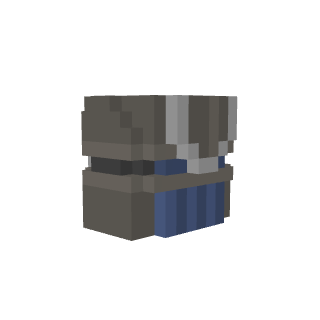
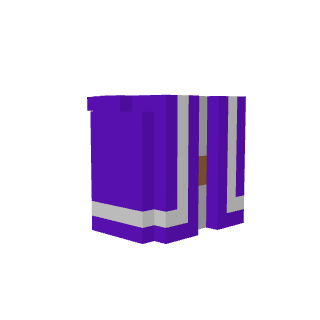
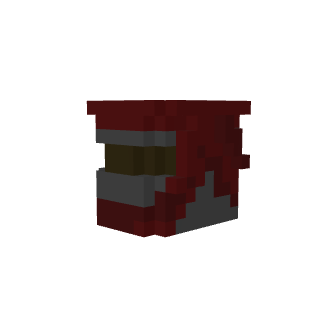
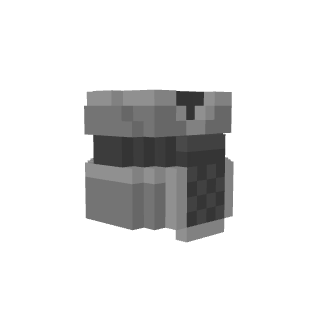
For the system, I took inspiration from the sets in Dofus. A single piece counts for little: it is gathering several from the same set that unlocks real bonuses, in tiers at two, three and four pieces. Each set becomes an archetype, one for strength, one for agility, one for health, and the goal is to complete the one that fits your build. Suddenly, the question is no longer "what is the best weapon", but "what build am I going for".
The real challenge was balancing. Pieces, sets, nearly infinite combinations: testing all that by hand would have taken weeks. As with skills, I relied on AI to simulate thousands of fights and spot what was too strong or too weak, and I recalibrated about ten times.
The equipment log covers the launch with the first four sets. At the time of filming, there were seventeen, for 68 pieces from common to legendary, and the arsenal had gone from 31 to 59 weapons. Armor forging follows the same principle as weapon forging. To choose yours, there is the armor set guide and the equipment catalog.
The exploit found by a player
A player wrote to me to report an exploit, and not a small one. When you launch a fight, the game sends the server the name of the chosen opponent. Except the server didn't check that this opponent was actually one of those it had offered you.
So all you had to do was modify the request, put in the name of a very weak brute that wasn't on your list, and beat it over and over: free experience and Elo. A beginner's mistake, one I should have seen, and one a player found before I did.
It was fixed the very same day. The server now rechecks everything before touching anything, and one rule is now set in stone: never trust what the browser sends. The player who warned me received potions as a thank-you. If you ever find an exploit, write to me through the contact page rather than using it: that is one of the perks of having hundreds of players on a game coded solo.
Skins, piece by piece
Skins change your look without changing your build: your armor stays equipped with all its stats, only the display changes. I rebuilt this system a second time to split it up by slot. You can wear just a skin's demon wings over regular armor, or mix pieces from several skins. The skins log explains why the first version was thrown away.
One skin can't be bought: the King of the Brutes. The only way to get it is to reach first place on the ladder. It is purely cosmetic, but everyone can see at a glance that you were number one.
Races, and hours spent on ears
Human, elf and orc. For an existing brute, the shop's Elixir of Metamorphosis lets you change its appearance.
The real headache came from helmets. There is no general rule for elf ears: in the end, seven helmets have to hide them, five let them stick out, and each case was settled one by one. Add the orc and its jaw, and you get hours spent on pointy ears. The kind of detail nobody notices, except when a combination goes wrong. The races log shows the result.
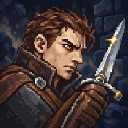
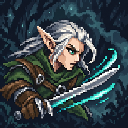
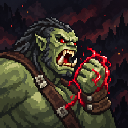
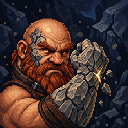
In the video, I say races are purely visual. That was true at the time of filming; it no longer is: each one got an innate ability, balanced over hundreds of thousands of simulated fights so that none comes out on top. And the dwarf became the fourth race, with its Stone Skin against critical hits.
Getting the word out
To give the game some visibility, it now has an X account that automatically posts, every week, the new legendary brutes and the top of the ladder. And a community quest rewards sharing: post your brute on X mentioning the game's account, and you receive an epic equipment piece. The game detects the share on its own, nothing to copy and paste, and the reward can only be earned once.
The game arrives on Android and iOS
Playing in the browser remains a huge advantage: you open the link, you play. But these days, people also look for their games on the Play Store and the App Store. I didn't have to recode everything: a tool, Capacitor, wraps the web game into a real native app. The same game runs inside an app shell.
Once purchases are involved, though, each store has its own rules. Two surprised me:
- to publish on Android, Google first requires twelve testers who launch the app several days in a row, which is a small project in its own right;
- inside an app, you are not allowed to point players to the website to buy, not even with a single sentence. So I blocked access to the web shop from the app, which will have its own shop using the stores' billing.
Since filming, sign-in with an Apple account has also arrived on the site: Apple requires it for any app that already offers Google sign-in.
Ads: barking up the wrong tree
For months, Google had refused to show ads on the site, citing low-value content. Over six attempts I wrote articles, a guide and catalogs, and I was rejected a seventh time. As a reminder, I am only after rewarded ads, which you choose to watch to win back energy, never banners.
Then it clicked. The Google crawler that reviews the site for advertising doesn't look at the same things as the search engine. I had indeed removed my overly thin pages from search results, but that crawler ignores that instruction and only obeys a different file. As far as it was concerned, the site didn't have 34 pages as I believed, but nearly 600: every brute page, auto-generated and almost empty, which it reached from the ladder. For months, I had been barking up the wrong tree. Those links have been cut, and the decision hasn't come in yet as I write this.
Bugs, the short version
- the game's music cut off Spotify and other apps on iPhone;
- some screens went completely black on certain screen sizes, because I was asking the graphics card for an image that was too heavy;
- with some helmets, the brute sank into the arena floor.
Such is the daily life of a developer: you fix things and move on.
What the game has earned
In the previous video, I announced the exact amount earned since launch: €13.64, enough to treat myself to a kebab for months of work. Since then, the total has gone up to €81.32 gross. Once payment fees are taken out, €62.80 is left, before taxes.
I won't be quitting my job on that. But this money comes solely from the site's shop, so from real people who chose to support a free game made by an independent developer, and that matters more than the amount. The next numbers will be in the next video.
Since filming, you have voted
The video ends with a question: what do you want to see first? Two-handed weapons and shields, new pets, a real-time multiplayer lobby, an auction house between players, or a world boss that everyone attacks, with loot split by damage dealt.
The first option is already live. Since October 19, every weapon has been either one- or two-handed, a one-handed weapon frees the off-hand for a second dagger, a shield, a tome or an orb, and two-handed weapons hit harder. The same update brought four classes at level 50, eight specializations at level 80 and talent trees: it is all in the off-hand and classes log.
The other ideas are still being decided in the comments under the video: I read every one of them. And if you want to try the game, it is free and you can play without an account in guest mode.