Each race gets its own talent
When races arrived, they only changed appearance: an orc and an elf of the same level were exactly evenly matched. Now they each gain an innate ability, active from the moment the brute is created and independent of the skills you learn as you level up.
No new stat, no hidden strength point: each ability is a small situational edge, which triggers at most twice per fight and adds no random roll.
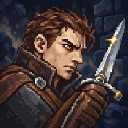
Human: Analysis
The human learns from its misses. After the opposing brute dodges one of its attacks, its next attack lowers the opponent's dodge by 10 points: an opponent at 30% dodge drops to 20% for that hit.
- 2 uses per fight.
- The reductions don't stack.
- A guaranteed dodge stays guaranteed: Analysis makes dodging harder, it doesn't cancel it.
It is the ability for builds that want to land hits: against a very agile brute, it cuts short those long streaks of swinging at thin air.
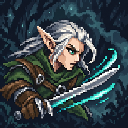
Elf: Momentum
The elf chains attacks when it strikes true. Its first two critical hits that wound the opposing brute each fill 15% of its action gauge. When the gauge reaches 100%, the elf gets to attack.
A crit that deals no damage doesn't count: if it is canceled by Unshakable, fully absorbed or intercepted by a pet, it doesn't trigger Momentum.
It is the ability for crit and speed builds: it brings the next attack forward just as the elf takes the upper hand.
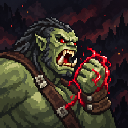
Orc: Bloodlust
The orc becomes dangerous when it is wounded. The first time its hit points drop below 30%, its next two attacks gain +20% damage if they land.
- Only one activation per fight, even if the orc heals or resurrects afterward.
- A hit that knocks it out in one blow triggers nothing: it has to still be standing below the threshold.
- Any source of damage can take it below 30%.
It is the ability for close fights: an orc on the ropes isn't finished yet.
What applies to all three
- Offensive bonuses only apply to your brute's attacks, not to its counterattacks or its pet's attacks.
- A missed or intercepted attack still uses up the prepared bonus. A normal extra attack uses one up too.
- Berserk remains available to every race and stacks with its ability.
No race above the rest
Before release, the three abilities were tested over 576,000 simulated fights: levels 5, 20, 50 and 100, five build families (balanced, strength, agility and crits, speed, stamina), with or without a weapon, with or without a pet. Each duel was replayed with the races and starting sides swapped.
The result, in average wins:
- Human: 49.5%.
- Elf: 49.3%.
- Orc: 51.2%.
All three stay within the target range, between 48 and 52%. So choosing a race is first and foremost a question of style: it shapes the way you play without naming a winner in advance.
The end of the old Bloodlust
There was already a common skill called Bloodlust (+10% damage below 60% health). With the arrival of the orc's ability, it leaves the catalog and is no longer offered on level-up.
Every brute that had learned it, orcs included, got an upgrade choice back in its place. Level, XP and other skills are untouched. Old fights replay identically, with their old skill.
A gift for older brutes
Your brute may have been created as a human by default, before race mattered in combat. So every brute that existed at launch receives, through the announcement shown on its profile, two free elixirs:
- Elixir of Origins: changes the race, and therefore the ability. It isn't sold in the shop.
- Elixir of Metamorphosis: changes the silhouette, the hairstyle and the colors, without touching the race.
If you click "Later", the gift stays available for a future visit.
Finding it in game
Your brute's ability shows up first in its specialties tab, ahead of the learned skills. It also appears when creating a brute, at the moment you choose its race, and on the Compare cards of the Tower of Brutes.
The three abilities are detailed side by side in the skills catalog, and the story of the races themselves is told in the human, elf or orc devlog.